6519 Wilson Mills Rd. Suite 100 Mayfield Village, OH 44143



By Parker Orthodontics | August 11, 2026
When should your child have their first orthodontic evaluation, and how can you tell when treatment should begin? Many parents expect orthodontic care to start during the teenage years. However, the right timing depends more on dental development than on a specific birthday.
The American Association of Orthodontists recommends an orthodontic checkup by age 7. At this age, children usually have both baby and permanent teeth, which provide valuable information about tooth eruption and jaw growth. An evaluation does not mean treatment must begin immediately.
At Parker Orthodontics, Dr. Stephan H. Parker can evaluate developing bite concerns and determine whether monitoring or early care is appropriate. Meeting with an orthodontist in Mayfield Village can help parents understand what is happening now and what may need attention as their child grows.
What Is the Right Age for a Child to Start Orthodontic Treatment?
There is no single age when every child should begin treatment. The AAO recommends an initial evaluation by age 7, but many children will only need periodic monitoring thereafter.
When an orthodontic problem could benefit from early correction, phase 1 orthodontics may begin while baby and permanent teeth are both present. Parker Orthodontics notes that this type of early treatment is commonly recommended for children between ages 6 and 10.
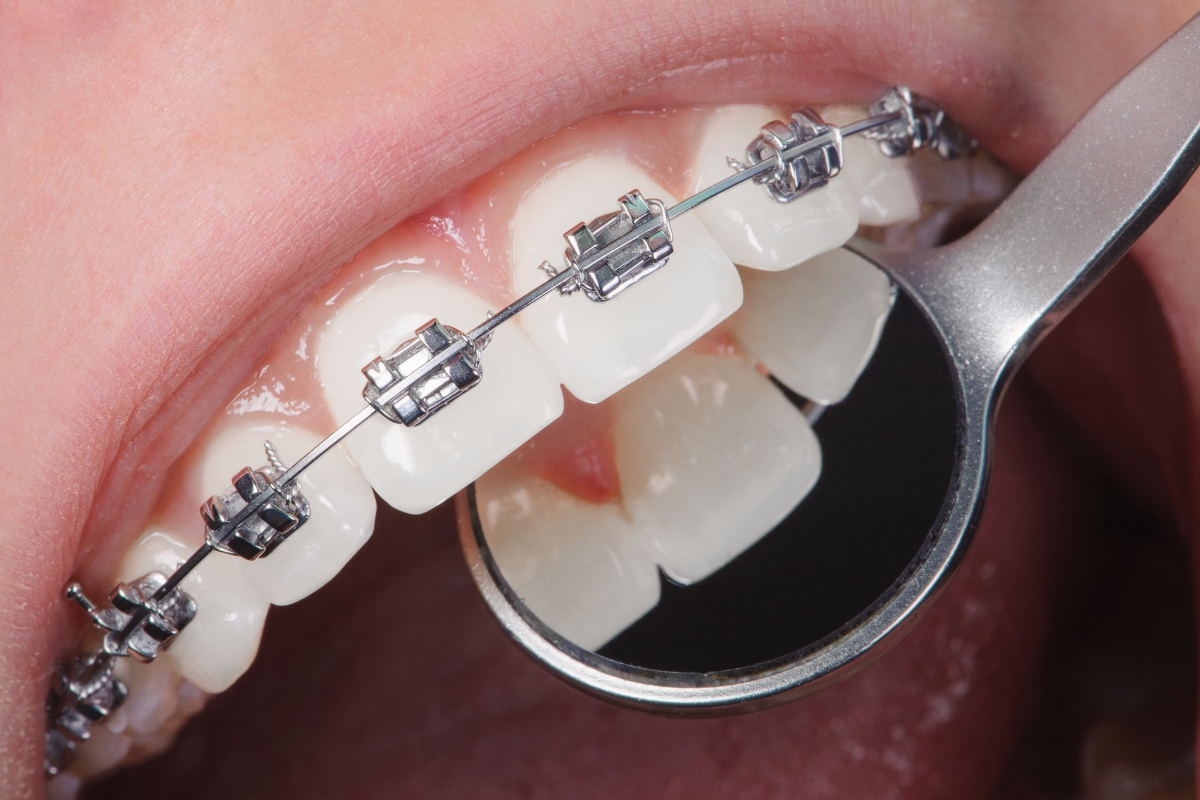
For some children, traditional braces may be part of this early approach. Others may need an expansion appliance, space management, or observation instead.
What Signs Could Mean My Child Needs an Orthodontic Evaluation?
Parents often notice changes before they know whether those changes require treatment. Some irregularities are normal during tooth eruption. Others deserve an orthodontic assessment.
Watch for:
- Crowded or overlapping teeth
- Permanent teeth erupting in unusual positions
- Early or delayed loss of baby teeth
- An underbite, crossbite, open bite, or pronounced overbite
- Difficulty biting or chewing
- Jaws that shift when closing
- Protruding front teeth
- Persistent thumb or finger sucking
- Mouth breathing
- Not enough room for incoming permanent teeth
These signs do not automatically mean your child needs traditional braces. They indicate that an orthodontist should examine tooth eruption, bite relationships, and jaw development. The AAO also identifies concerns such as irregular loss of baby teeth, chewing problems, bite abnormalities, and unusual eruption patterns as reasons for evaluation.
Why Does Age 7 Matter If Treatment May Not Start Yet?
Age 7 matters because timing an evaluation and timing treatment are two different decisions.
At this stage, the first permanent molars and front teeth have usually begun to appear. An orthodontist can assess how the upper and lower jaws relate and whether there is enough space for permanent teeth.
A trusted orthodontist in Mayfield Village may recommend observation rather than immediate treatment when development appears healthy. Regular growth checks can track tooth eruption and help identify the appropriate treatment window.
This distinction is important. Early evaluation should never mean unnecessary early treatment.
When Can Phase 1 Orthodontics Help a Growing Child?
Phase 1 orthodontics focuses on a specific developing problem while a child is still growing. It does not aim to complete every aspect of tooth alignment.
Early intervention may be considered for significant crowding, crossbites, abnormal jaw relationships, eruption problems, or limited space for permanent teeth. In selected cases, traditional braces can move certain teeth while growth is still active.
Parker Orthodontics describes its Traditional Phase 1 treatment as an approach that may guide jaw development, create room for permanent teeth, and address developing bite concerns.
Does Starting Early Mean My Child Will Avoid Treatment as a Teen?
Not necessarily, parents should understand this before choosing phase 1 orthodontics.
Early treatment addresses specific developmental concerns. Afterward, children often enter an observation period while the remaining permanent teeth erupt. Some later require comprehensive treatment to refine tooth alignment and bite relationships.
Parker Orthodontics explains that children may enter a resting and monitoring stage after early treatment before later care is considered. Therefore, traditional braces during an early phase should not be viewed as a guarantee that no future orthodontic care will be necessary.
Should We Wait Until All Permanent Teeth Come In?
No, an evaluation should not automatically wait until all permanent teeth have erupted.
Certain jaw-growth and eruption problems are easier to assess while a child is still developing. The AAO notes that waiting until facial growth is nearly complete can make some orthodontic problems more difficult to address.
For example, a child with a developing crossbite may benefit from assessment earlier than a child with mild cosmetic spacing. Likewise, severe crowding may require a different timeline than minor rotation.
This is why treatment decisions should follow diagnosis rather than age alone. Traditional orthodontics is one possible tool, not the default recommendation for every child.
What Happens During a Child’s Orthodontic Evaluation?
An early orthodontic visit focuses on understanding growth, eruption, jaw relationships, and available space.
The orthodontist examines how the teeth meet and whether the jaws appear to be developing proportionately. When appropriate, diagnostic records may include photographs, digital scans, or X-rays. These records can reveal eruption concerns that parents cannot see at home.
If phase 1 orthodontics is appropriate, the treatment plan should have a clear objective. Depending on the problem, that plan may involve traditional braces or another orthodontic appliance. If treatment is not needed yet, observation may be the most appropriate recommendation.
When Is It Better to Monitor Rather Than Treat?
Sometimes, waiting is an active clinical decision rather than doing nothing.
If tooth eruption and jaw development remain within an acceptable pattern, an orthodontist may monitor growth at scheduled visits. This approach avoids starting treatment before it can provide a meaningful benefit.
A child with mild spacing, for example, may simply need monitoring as more permanent teeth emerge. Another child with a significant crossbite may benefit from earlier intervention.
The decision to use traditional braces should therefore depend on the child’s individual growth pattern, bite, tooth eruption, and treatment needs.
Schedule Your Child’s Orthodontic Evaluation at Parker Orthodontics
Knowing the right time for phase 1 orthodontics starts with understanding how your child’s teeth and jaws are developing. Early evaluation can identify concerns while also confirming when treatment can safely wait.
At Parker Orthodontics, Dr. H. Parker can evaluate your child’s bite, jaw growth, tooth eruption, and available space before recommending the next step. If your child is approaching age 7, or if you have already noticed alignment or bite concerns, visit our dental office to schedule an evaluation with our orthodontist in Mayfield Village. A professional assessment can help you make an informed decision about whether traditional braces or continued monitoring is appropriate.
Frequently Asked Questions
Q. 1. Can my 6-year-old start orthodontic treatment?
Yes, but only when there is a specific developmental reason. Some children between the ages of 6 and 10 may benefit from early intervention while baby and permanent teeth are both present. An orthodontic evaluation can determine whether your child has a bite, jaw-growth, crowding, or eruption problem that would benefit from early treatment rather than monitoring.
Q. 2. Does every 7-year-old need orthodontic treatment?
No. Age 7 is recommended for an evaluation, not automatic treatment. Many children are simply monitored as their permanent teeth erupt. If the orthodontist identifies a problem that could benefit from growth guidance or early correction, treatment may be recommended. A consultation can clarify whether intervention now offers a meaningful clinical benefit.
Q. 3. What happens if we wait to have our child evaluated?
The effect of waiting depends on the orthodontic problem. Mild concerns may remain suitable for later treatment. Certain crossbites, jaw discrepancies, eruption problems, or severe space limitations may benefit from earlier assessment. Rather than guessing, parents can schedule an early evaluation and learn whether treatment should begin or whether observation is appropriate.
Q. 4. How do I know if crooked teeth are normal during childhood?
Some irregular alignment is common while permanent teeth erupt. However, significant crowding, teeth erupting outside the normal arch, bite problems, or limited space deserve evaluation. An orthodontist can distinguish a temporary developmental stage from a concern that may require intervention and explain whether monitoring or early treatment makes more sense.
Q. 5. Will my child need another orthodontic treatment phase later?
Possibly. Early treatment usually addresses a specific developmental problem rather than completing all tooth alignment. After treatment, the orthodontist may monitor jaw growth and the eruption of permanent teeth. Later comprehensive care may still be recommended. Scheduling an evaluation can help parents understand the purpose of early care and what future treatment may involve.