6519 Wilson Mills Rd. Suite 100 Mayfield Village, OH 44143


By Parker Orthodontics | August 26, 2026
Parents often wonder whether crooked teeth are a temporary part of childhood or a sign that treatment may be needed. Changes in tooth position are common while baby teeth fall out and permanent teeth emerge. However, pronounced crowding, bite problems, and uneven jaw growth may not improve without care.
At Parker Orthodontics, orthodontist Dr. H. Parker evaluates how a child’s teeth, jaws, and facial structures are developing. An early assessment does not automatically mean your child will receive dental braces right away. It helps determine whether treatment is needed now, later, or not at all. For families considering metal braces in Mayfield Village, recognizing the following signs can make it easier to seek an evaluation at an appropriate stage of development.
At What Age Should a Child Be Evaluated for Braces?
The American Association of Orthodontists recommends an initial checkup by age 7. At this age, children usually have a mixture of baby and permanent teeth. This allows the doctor to assess tooth eruption, available space, jaw alignment, and the way the upper and lower teeth meet.
Age 7 is not a universal starting age for dental braces. Many children only need periodic monitoring until more permanent teeth appear. Others may benefit from early orthodontic treatment, also called Phase 1 or interceptive treatment, between ages 6 and 10.
Signs Your Child May Need Braces
1. Crowded or Overlapping Teeth
Crowding occurs when the dental arches do not have enough space for incoming teeth. Permanent teeth may erupt at an angle, overlap adjacent teeth, or become trapped beneath the gums. Crowded teeth can also make brushing and flossing harder, allowing plaque to collect in tight spaces.
2. An Overbite, Underbite, or Crossbite
A bite problem occurs when the upper and lower teeth do not meet correctly:
- An overbite causes the upper front teeth to cover too much of the lower teeth.
- An underbite places the lower teeth in front of the upper teeth.
- A crossbite causes one or more upper teeth to sit inside the lower teeth.
- An open bite leaves a space between the front teeth when the back teeth touch.
These conditions can affect chewing, tooth wear, and jaw movement. Some bite problems respond more predictably while a child is still growing.
3. Early, Late, or Irregular Loss of Baby Teeth
Losing baby teeth much earlier or later than expected can affect the path of permanent teeth. Early tooth loss may allow nearby teeth to move into the open space. A baby tooth that remains in place too long may prevent its permanent replacement from erupting properly.
The American Academy of Pediatric Dentistry advises monitoring developing teeth for eruption disturbances, missing teeth, extra teeth, crowding, and bite problems. An examination can show whether the eruption pattern requires observation or intervention.
4. Difficulty Biting or Chewing Food
Children should be able to bite and chew without regularly avoiding certain foods, shifting their jaw, or experiencing discomfort. Difficulty eating may indicate that the teeth do not make balanced contact. Dental braces may improve alignment so the teeth can work together more effectively.
5. Persistent Thumb-Sucking or Pacifier Use
Prolonged thumb-sucking, finger-sucking, or pacifier use can place repeated pressure on developing teeth and jaws. Depending on the habit’s duration and intensity, it may contribute to protruding front teeth, an open bite, or changes in the width of the upper jaw.
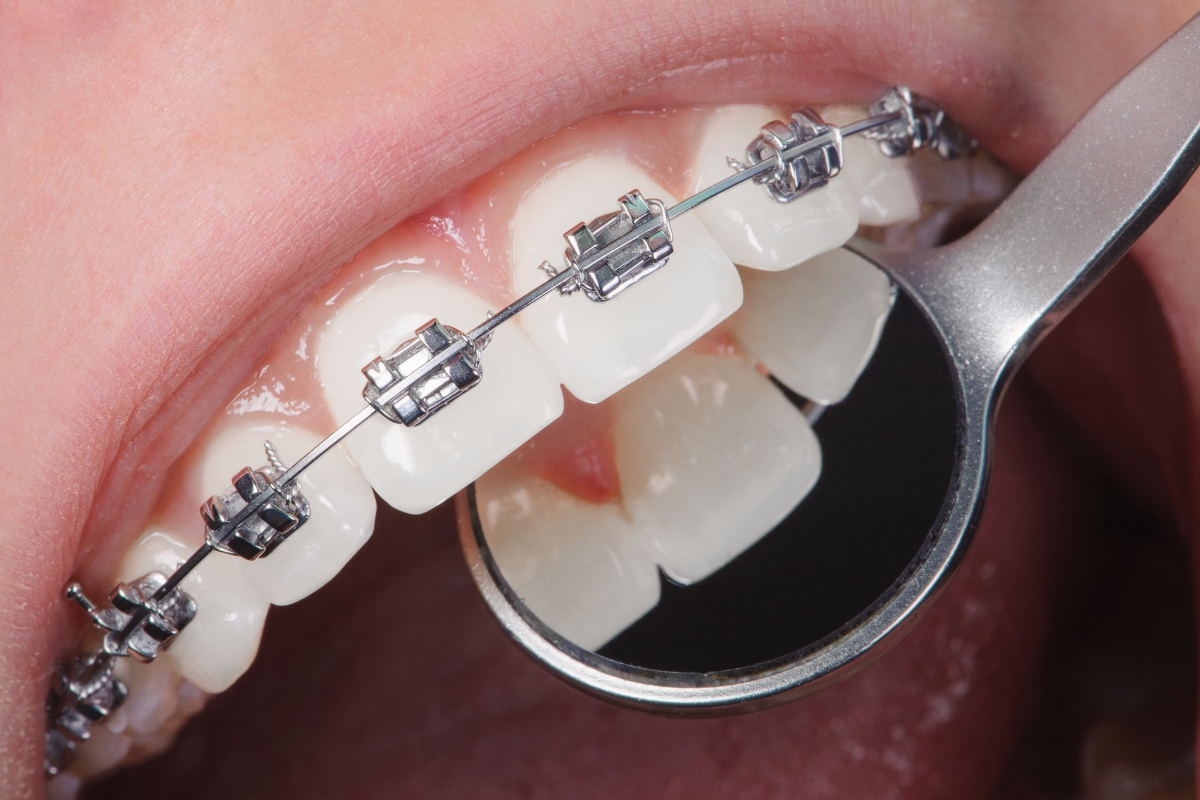
Parents exploring braces in Mayfield Village can also learn about their treatment options by exploring the differences between metal braces and ceramic braces, including the pros and cons of each.
6. Mouth Breathing or Difficulty Closing the Lips
Frequent mouth breathing can occur for several reasons and does not prove that a child needs treatment. However, it may appear alongside narrow dental arches, protruding teeth, or changes in facial growth. A healthcare provider should also assess possible nasal or airway concerns.
7. Jaw Shifting, Clicking, or Facial Imbalance
Watch whether your child moves the jaw sideways when closing the mouth. Uneven jaw movement, frequent cheek biting, or noticeable facial asymmetry may point to a crossbite or another alignment concern. An early evaluation can determine whether growth should simply be monitored or actively guided.
8. Protruding Front Teeth
Front teeth that extend significantly forward may be more vulnerable to injury during falls, sports, or playground activities. Dental braces or another appliance may be considered to improve their position and reduce excessive overjet.
Does Every Child With Crooked Teeth Need Early Treatment?
No, mild irregularity may improve as the jaws develop and additional permanent teeth erupt. Phase 1 treatment is generally reserved for problems that could interfere with jaw growth, tooth eruption, bite function, or available space.
When early care is recommended, its purpose may include:
- Guiding jaw development
- Correcting a crossbite or underbite
- Creating space for permanent teeth
- Reducing the risk of impacted teeth
- Addressing harmful oral habits
- Improving how the upper and lower teeth meet
Some children still need dental braces during adolescence after completing Phase 1. Early care is intended to address a developing problem, not guarantee that later treatment will be unnecessary.
What Happens During a Child’s Braces Consultation?
During the first assessment, the orthodontist examines the teeth, bite, jaw relationship, facial balance, and eruption pattern. Diagnostic images or digital scans may be recommended when necessary. Parents can then learn whether observation, early intervention, or comprehensive treatment is appropriate.
If you notice crowding, abnormal tooth eruption, or an uneven bite, visit our dental office for a child braces consultation. The appointment provides an opportunity to discuss treatment timing, appliance options, expected duration, oral hygiene, and your child’s ability to cooperate with care.
Help Your Child Build a Healthier, More Functional Smile
Recognizing orthodontic warning signs early can give your family more time to understand the available options. Evaluation does not always lead to immediate treatment, but it can prevent an important growth or eruption concern from being overlooked.
To learn whether metal braces in Mayfield Village may be appropriate for your child, contact Parker Orthodontics and book an appointment for a braces consultation. A careful assessment can help establish the right timing for dental braces and support your child’s developing smile.
Frequently Asked Questions
Q 1. Can A Child Get Braces While Baby Teeth Are Still Present?
Yes. Some children receive limited early treatment while they have both baby and permanent teeth. This approach may be recommended when a bite problem, severe crowding, or uneven jaw growth should be addressed before adolescence.
Q 2. Do Crooked Baby Teeth Mean Permanent Teeth Will Also Be Crooked?
Not necessarily. Baby-tooth alignment does not always predict permanent-tooth position. However, severe crowding, missing spaces, or abnormal eruption should be assessed to determine whether monitoring or treatment is appropriate.
Q 3. How Long Do Braces For Children Usually Take?
Treatment length depends on the child’s bite, tooth position, growth, and cooperation. Limited early treatment may last several months, while comprehensive treatment can take longer. An examination is needed to provide a meaningful estimate.
Q 4. Can Braces Help A Child’s Bite As Well As Straighten Teeth?
Yes. Treatment can improve how the upper and lower teeth meet, not merely how straight they appear. Correcting bite alignment may support chewing, reduce uneven tooth wear, and create a more balanced relationship between the teeth and jaws.
Q 5. What Happens If My Child’s Bite Problem Is Left Untreated?
Some mild concerns can be monitored safely, but significant problems may become harder to correct as growth progresses. A consultation can clarify the severity of the issue and whether postponing care presents any functional or developmental risks.